
Could Far-Right Reform Really Win a UK General Election Now?
In recent months, the British political landscape has been reshaped by shifting public sentiments, growing disillusionment with traditional parties, and a rise in support for populist movements. Among these, the Reform UK party — long considered a fringe force — has emerged as a notable contender in national discussions, prompting analysts and voters alike to ask: Could Reform really win a UK general election today?
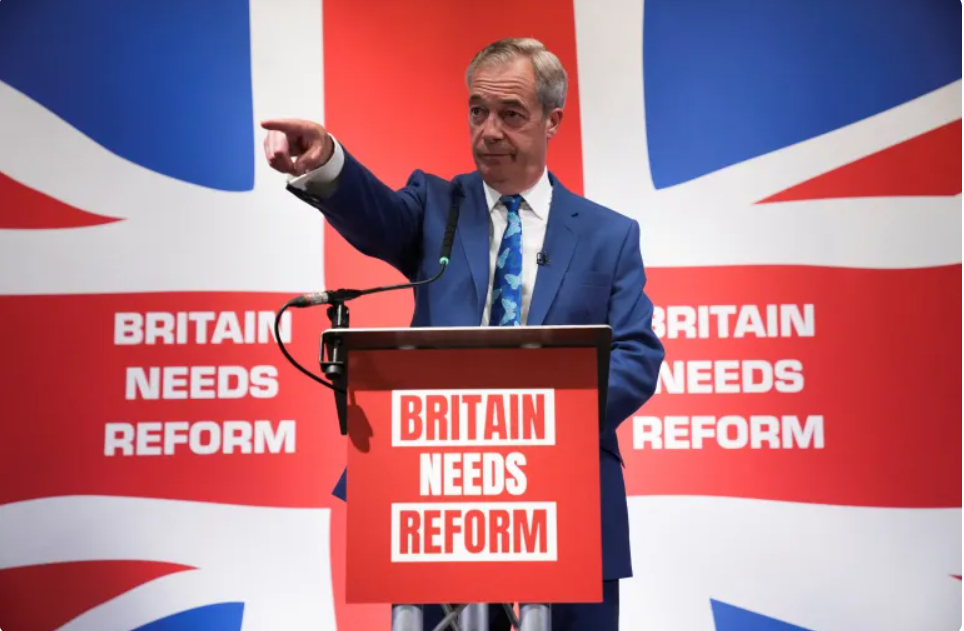
Reform UK, led by a strong-media presence and outspoken criticism of mainstream politics, has capitalised on voter frustrations over issues such as immigration, economic stagnation, and perceived political elite failures. Their message of radical change resonates with segments of the electorate unhappy with the status quo.
Electoral System: A Major Hurdle
Despite increasing visibility and polling gains, Reform UK faces structural barriers in the British electoral system. The UK uses a First-Past-the-Post (FPTP) voting method, favouring larger, established parties and making it difficult for smaller parties to convert national support into parliamentary seats.
Under FPTP, a party must win individual constituencies outright to gain Members of Parliament (MPs), and national vote share does not translate proportionally into seats. This has historically disadvantaged parties outside the traditional Conservative and Labour duopoly.
Analysts point out that even if Reform UK were to achieve a significant share of the national vote, winning a majority of seats in the House of Commons would remain a steep challenge.
Growing Support — But Is It Enough?
Recent opinion polls have shown Reform UK performing strongly in certain regions, particularly among voters disillusioned with mainstream politics. Their messaging on strict immigration controls and economic reform has attracted some working-class voters who feel overlooked by traditional parties.
However, the party continues to struggle with broad national appeal. Many voters remain sceptical of its policy proposals and question its readiness to govern. Electoral success on the scale required to form a government — much less win a parliamentary majority — remains unlikely in the near term, according to many political scientists.
Impact on Major Parties
Even if Reform UK does not win outright, its rise could have a significant impact on British politics. By drawing votes away from established parties, particularly the Conservatives, Reform may influence electoral outcomes in key constituencies.
This strategic shift could reshape traditional voting patterns, forcing major parties to reassess their platforms and campaign strategies. In some scenarios, Reform could become a kingmaker force in a hung parliament — where no single party holds a majority — by leveraging influence in coalition negotiations.
Public Perception and Media Attention
Reform’s media strategy has amplified its visibility, using provocative messaging to capture attention. While this has boosted its profile, it has also drawn criticism from opponents who warn against normalising far-right rhetoric in mainstream politics.
Social media platforms and talk shows have given Reform leaders a stage to articulate their vision, but critics argue this exposure risks polarising public discourse and deepening social divisions.
What’s Next?
As the next general election approaches, political observers will be watching closely to see whether Reform UK can translate headline-grabbing polling into real electoral success. While winning a majority remains a long shot under the current system, the party’s growing influence could still reshape British political dynamics.
Whether this translates into seats in Parliament — or merely shifts in how other parties campaign — will be a key storyline in Britain’s evolving political narrative.